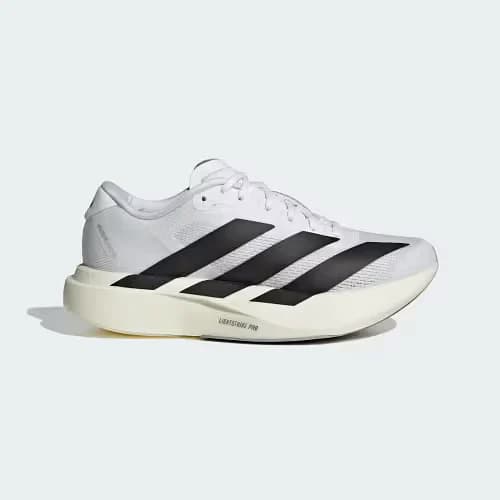
The EVO SL takes the premium Lightstrike Pro foam associated with adidas racing shoes and puts it into a simpler, plate-free trainer. That recipe matters: it preserves much of the rebound and low weight of the Adizero line while making the ride more flexible, natural and approachable for everyday mileage.

Adizero EVO SL
One of the clearest do-it-all recommendations in running: light, protective and genuinely fast without relying on a rigid plate. Its minimal tongue, ordinary laces and relatively narrow platform are the compromises behind the exceptional performance-to-price ratio.
The bottom line
One of the clearest do-it-all recommendations in running: light, protective and genuinely fast without relying on a rigid plate. Its minimal tongue, ordinary laces and relatively narrow platform are the compromises behind the exceptional performance-to-price ratio.
Ride and cushioning
The midsole feels firmer than a plush recovery shoe, then comes alive as pace increases. Cushioning is deep enough for long efforts, yet the shoe never feels detached from the road. With no carbon plate dictating the transition, cadence and foot strike can change naturally; the rocker helps, but it does not force the runner onto the toes.
Fit and upper
The upper is light and highly breathable with a secure performance fit. The weak point is the tongue-and-lace arrangement: the tongue is short and not gusseted, and the stock laces can require careful tying. Most runners should start true to size, but fit-sensitive buyers should try it before committing.
Stability, grip and durability
A narrow waist and soft, energetic foam mean this is not a support shoe. Neutral runners with sound mechanics should find it predictable, while anyone who collapses inward late in long runs may prefer the broader Superblast 3. Outsole coverage is strategically placed and handles normal training mileage well.
Best uses
The sweet spot runs from steady aerobic work through marathon-pace sessions and tempo runs. It can cover easy days, but its energetic personality encourages movement, and runners may prefer a calmer shoe for recovery. It is also a credible non-plated race option for runners who dislike rigid super shoes.
Trade-offs
The stripped-back upper does not match the polish of the midsole, and stability is merely adequate. Very slow runners may not unlock the foam's best character. Those limitations are real, but they are unusually small beside the shoe's speed, protection and versatility.
Key specifications
Terrain: Road
Support: Neutral
Cushioning: High
Plate: None
Weight: 224 g
Heel-to-toe drop: 7.0 mm
Stack: 39.0 mm heel / 32.0 mm forefoot
Widths: Standard
Alternatives to consider
Choose the Saucony Endorphin Speed 5 for a guided, plated transition; the ASICS Novablast 6 for a softer and more conventional daily-trainer feel; or the adidas Boston 13 for a firmer, more structured workout shoe with greater outsole coverage.
How we reviewed it
This is a Shoe Feed research review, not a claimed hands-on wear test. We synthesised the manufacturer's current specifications with independent RunRepeat lab findings, then evaluated where the shoe fits in the current training market. No first-hand test distance is reported.